

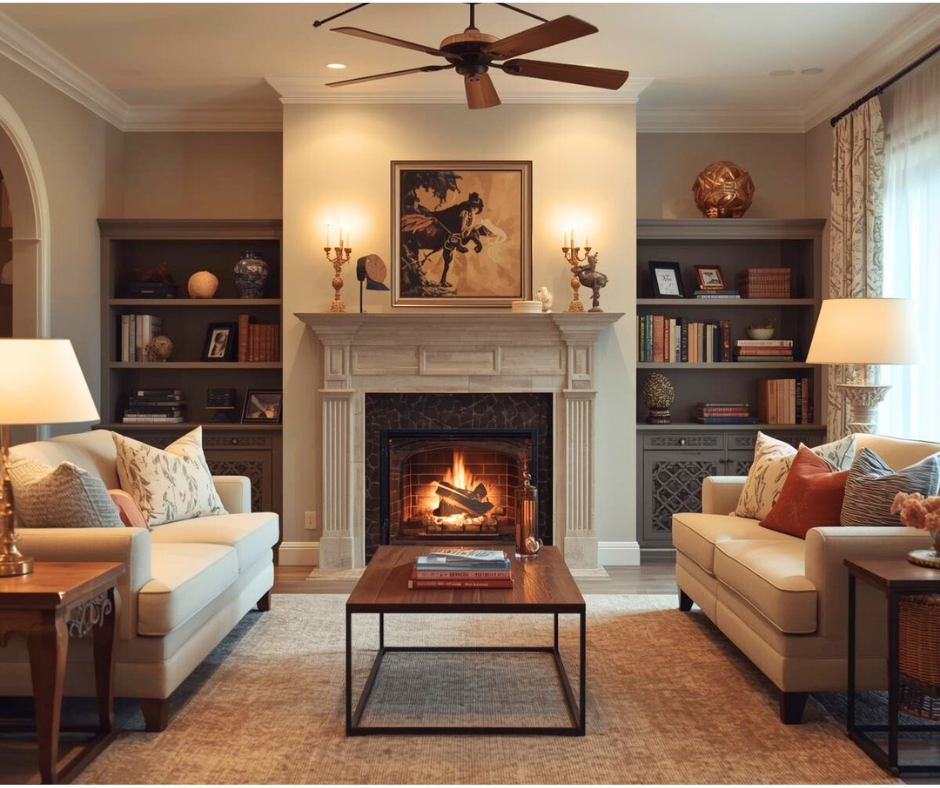
Creating Calm at Home: Simple Design Changes That Make a Big Difference
If your home feels cluttered, awkward, or just a little “off,” small design adjustments can make a surprising difference. In this post, we’re sharing simple changes—from furniture layout and lighting to artwork placement and visual clutter—that can help bring calm, comfort, and cohesion back into your space.
Why your home may not feel quite right, and the small fixes that can transform it.
Sometimes a home doesn’t feel quite right.
You walk into a room and something feels off—maybe it feels cluttered, awkward, unfinished, or just a little chaotic. Yet you can’t always pinpoint why you don’t feel the ease in your space that you would like.
The good news? Most of the time, the things that keep us from loving our spaces are surprisingly simple to fix. With just a few thoughtful adjustments, you can transform your home into a place that feels calmer, more cohesive, and welcoming at the end of a long day.
Here are a few common design issues I often see—and easy ways you can refresh your space.
1. Visual Clutter That Never Goes Away
One of the biggest reasons a home can feel stressful rather than calming is visual clutter.
When countertops, tables, and floors are filled with too many objects, the eye never gets a chance to rest. Even beautiful items can create overwhelm if there are simply too many of them.
Take a little time to clear surfaces:
Simplify kitchen counters
Edit what’s sitting on coffee tables or entry tables
Remove extra items from the floor
Tuck away things you don’t use daily
The goal isn’t to remove personality—it’s to create breathing room for the pieces you love to stand out.
2. Awkward Furniture Layouts
Sometimes a room feels uncomfortable simply because the furniture isn’t working with the space.
A helpful trick is to do a quick sketch of your room on paper and play with furniture placement from a bird’s-eye view. Seeing the layout this way often reveals solutions that aren’t obvious when you’re standing inside the room.
Over time we tend to collect furniture and keep adding pieces without asking:
Does this actually improve the room?
Or am I just filling every available space?
Sometimes removing a piece—or rearranging what you already own—can completely change how a room feels.
3. Poor Traffic Flow
Good design should feel effortless to move through.
You should be able to walk easily around furniture without squeezing through tight gaps or bumping into corners.
A few simple guidelines help:
Leave comfortable walking space between furniture pieces
Ensure enough distance between sofas and coffee tables
Keep pathways open so movement through and around the room feels natural
When a room flows well, it instantly feels calmer and more welcoming.
4. Hard Surfaces That Need Softening
Kitchens and bathrooms often have a lot of hard surfaces—tile, stone, cabinetry, and fixtures. Without balance, these spaces can feel a bit cold or sterile.
The solution is to layer in softness.
Consider adding:
Area rugs
Simple window treatments
Countertop lamps
Plants or greenery
These touches soften the space visually and make it feel warmer and more inviting.
5. Hardware That Feels Builder-Grade
Think about the things you touch every single day:
Door knobs
Cabinet pulls
Faucets
These small details make a bigger impact than most people realize. Updating them with high-quality fixtures can elevate an entire room.
One design trend I love, that’s here to stay, is mixing metals.
For example:
A polished nickel faucet
Paired with brushed brass cabinet pulls
Mixing metals adds depth and personality while avoiding that uniform “builder-grade” look.
6. The Little Repairs We Learn to Ignore
Over time, many of us go blind to small imperfections in our homes.
Tiny drywall cracks, gaps in trim, or worn paint can slowly make a space feel unfinished.
But a quick refresh can make a dramatic difference:
Fill drywall or trim cracks with caulk or filler
Touch up trim paint
Repair small scuffs or dents
These small improvements bring a surprising sense of polish and completion to a room.
7. Area Rugs That Are Too Small
This is one of the most common design mistakes I see.
A rug that’s too small can make a room feel disconnected, as if all the furniture is floating separately rather than belonging together.
A good rule of thumb:
Choose a rug large enough that all the furniture in a grouping sits on it, or
At least the front legs of sofas and chairs rest on the rug
Larger rugs help anchor the room and instantly make the space feel more cohesive.
8. Artwork Hung Too High
Artwork is often hung far too high on the wall, which can make it feel like it’s floating in space.
Instead:
Hang artwork closer to your eye level, or lower
Place it 6-8 inches above a console table or sofa
You can also create more visual interest by layering elements together:
Artwork on the wall
Books or objects on a console
A vase or plant in front
You don’t want every item to stand alone—layering creates a more natural, collected look.
9. Window Treatments That Don’t Work With the Window
Window treatments can make a room feel finished and intentional—but they’re often hung too low or too narrow.
Instead of placing drapes directly above the window frame, try hanging them:
Higher on the wall
Wider than the window
This allows the drapes to sit to the side when open so they don’t block natural light. The result makes windows appear larger and the room feel more spacious.
10. Relying Only on Overhead Lighting
Many homes, especially newer ones, are wired primarily for overhead lighting. While it’s practical as in your kitchen, it’s actually one of the least calming types of lighting in a home.
Overhead lights tend to feel harsh and flat, which can make a space feel more like a workspace than a place to relax.
The secret to creating warmth and comfort is layered lighting.
Try incorporating mid-level and low lighting throughout your home:
Table lamps on side tables
Floor lamps in dark corners
Small lamps on bookshelves
Directional lighting to highlight artwork
Soft lighting on kitchen counters or buffets
Lighting different areas of a room at varying heights instantly changes the mood. Instead of one bright light flooding the entire space, you create pockets of soft glow that feel welcoming and calm.
One of my favorite tricks is simply lighting the corners of a room. It adds warmth, depth, and a sense of intention that overhead lighting alone can’t achieve.
When layered lighting is used well, a room doesn’t just look better—it feels better. This is particularly important when living in Alaska with our longer dark winters.
Our Homes Are Always Evolving
Here’s the truth: our homes are never truly finished.
Mine certainly isn’t. In fact I am regularly working on all of these things that I’m sharing with you here, particularly decluttering surfaces…..how does all that stuff build up so quickly?!
Every once in a while, it helps to walk slowly through your home and notice the spaces that don’t feel quite right. Ask yourself if one small adjustment could bring more calm, comfort, or cohesion.
Because your home should feel like a place that welcomes you,
a place that holds you at the end of a long day and embraces you like a hug.

Home Styling vs. Home Staging: What’s the Difference?
Home Styling and Home Staging sound similar—but they serve two very different purposes. Learn which one is right for you, whether you're refreshing your space or preparing it for sale.
If you’ve ever wondered what the difference is between home styling or staging, and which you need—you’re not alone! These two services sound similar, and they both involve arranging furniture and decor, but they serve very different purposes. At Storied Interiors, I offer both, and today I’m breaking down what each one really means, and how to know which is right for your space.
Home Styling: Making Your Home Feel More Like You
Home Styling is all about helping you love the space you live in. Whether you’ve just moved into a new home or you’ve lived in it for years and want a refresh, styling brings new life to your rooms by reworking furniture, art, and accessories you already have—or helping you find new pieces that fit your style and needs.
Sometimes you don’t quite know why you don’t love your space, or how to make it look and feel the way you see others homes or the spaces in a magazine, but you just don’t quite know how to create that ‘feel’ that you are looking for.
Home styling sessions are relaxed, collaborative, and full of small “aha” moments—like moving a chair to the other side of the room and realizing it changes everything. It’s about comfort, function, and beauty. It’s also a great fit if you’re stuck in decision fatigue and just need a fresh eye and a little guidance to move forward.
Think of it as a creative partnership, designed to help you enjoy your space more fully. And yes—it works just as well virtually as it does in person.
Home Staging: Prepare to Impress (and Sell!)
Home Staging, on the other hand, is about preparing your property for sale. It’s strategic and buyer-focused. The goal is to make your home as appealing as possible to a broad range of potential buyers—and help them imagine themselves living there.
During a staging consultation, we walk through your home together and identify ways to highlight its best features, remove visual distractions, and improve flow. You’ll get a clear, actionable plan that you can follow to get the home ready for photos, showings, and ultimately, a successful sale for top dollar.
Staging is not about making the home “perfect”—it’s about making it feel open, inviting, and memorable.
So Which Do You Need?
Ask yourself:
→ Am I staying or selling?
→ Do I want to love my space more, or do I want someone else to fall in love with it?
If you’re living in it and want help making it work better for you, go with Home Styling.
If you’re planning on listing it for sale, it’s time to consider Home Staging.
At Storied Interiors, I believe good design should be approachable, personal, and practical—no matter the stage of home you’re in. Whether we’re styling your space for everyday functionality and living or staging it for a new beginning, I’m here to help tell your story beautifully.
📩 Want to schedule a consult or learn more? Email me here.